
Why Getting 200 Ton Crane Hire Right Can Make or Break Your Project
200 ton crane hire is the go-to solution for heavy industrial lifts that smaller equipment simply can’t handle. Here’s a quick snapshot of what you need to know:
| What You Need to Know | Quick Answer |
|---|---|
| Typical capacity range | 200–220 metric tons depending on counterweight config |
| Max boom reach | Up to 72m main boom, 92m tip height |
| Max working radius | Up to 64 metres |
| Common crane types | All-terrain, crawler, hydraulic truck |
| Popular models | Liebherr LTM 1200, Demag AC200, Link-Belt ATC-3200, Grove GMK5200 |
| Rental cost range | $1,500–$2,000+ per day (bare rental); higher with operator and mobilization |
| Hire options | Bare rental or Operated & Maintained (O&M) |
| Included in full-service hire | Operator, rigging team, lifting gear, insurance, lift planning |
Every heavy lift project is different. The load weight, site conditions, and required reach all shape which crane you need — and how much it costs.
A 200-ton all-terrain crane is one of the most capable and versatile machines in the heavy lift world. It can handle everything from wind turbine components and tower crane assembly to factory relocations and transformer moves. But booking the wrong crane — or the wrong company — can lead to costly delays, safety risks, and serious budget blowouts.
That’s why choosing carefully matters.
I’m Marilyn Nooren Wilkes, Marketing Director at CraneMap and a growth specialist in the Heavy Lift and Heavy Haul industries, where 200 ton crane hire is a topic I work with every day. With a background bridging technical logistics and industrial sourcing, I’ll walk you through everything you need to make a confident, informed decision.
Understanding 200 Ton Crane Hire Capabilities and Models
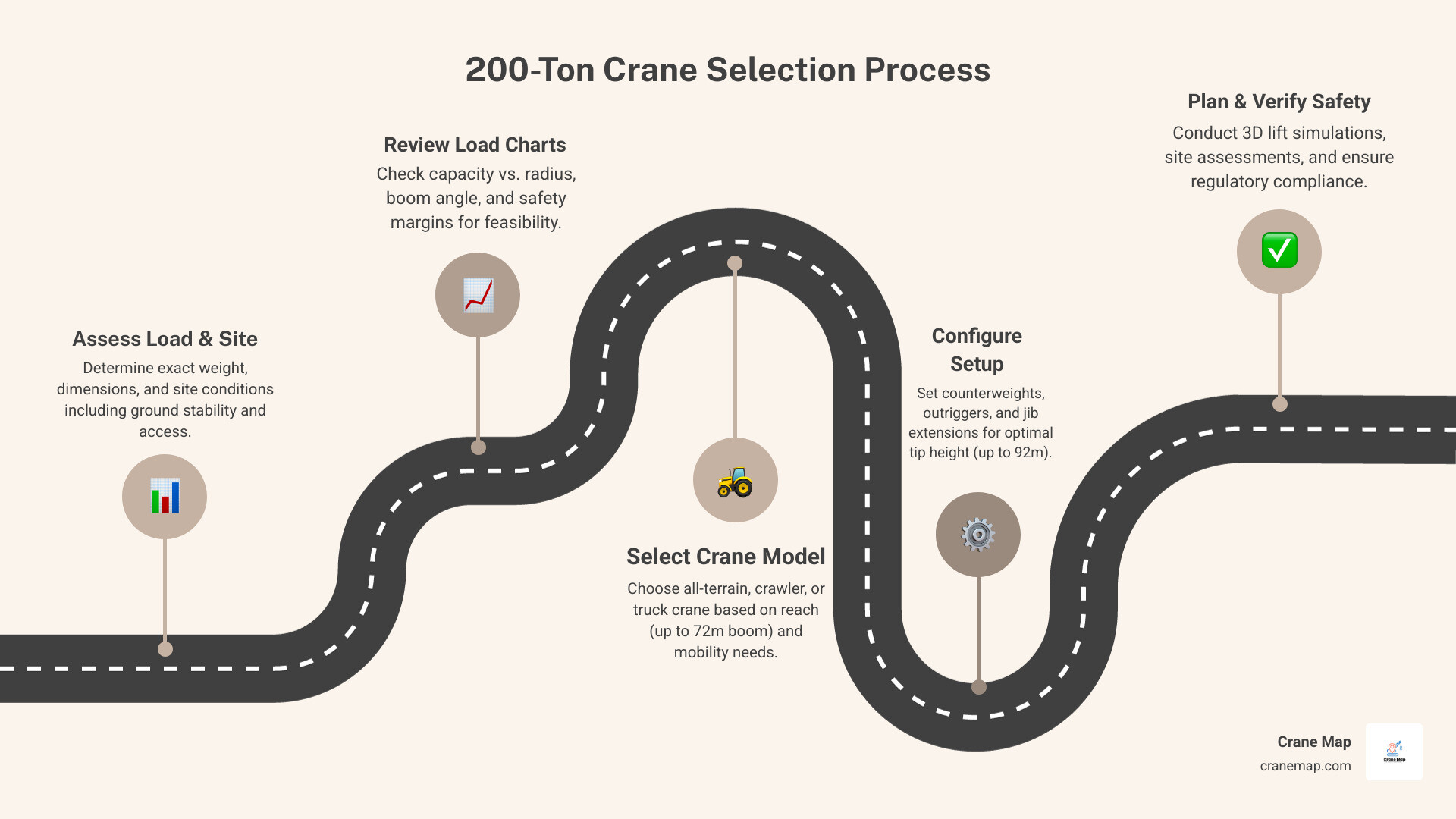
In April 2026, the landscape of 200 ton crane hire is more technologically advanced than ever. When we talk about a “200-ton crane,” we are generally referring to the maximum lifting capacity at a very short radius (usually around 3 meters). As the distance from the crane increases, that capacity drops—a fundamental rule of physics we must always respect.
There are three primary types of cranes you’ll encounter in this weight class:
- All-Terrain (AT) Cranes: These are the “Swiss Army Knives” of the industry. They combine the highway speed of truck cranes with the off-road maneuverability of rough-terrain cranes. Models like the Demag AC200 or the Liebherr LTM 1200 are incredibly popular for urban projects because they can drive to the site, set up quickly, and work in tight spaces.
- Crawler Cranes: If your project requires moving while carrying a massive load, or if you are on a long-term site with soft ground, a crawler is your best bet. While they take longer to transport and assemble, their stability is unmatched.
- Hydraulic Truck Cranes: These are built for efficiency and speed. They are ideal for projects where the crane needs to move between multiple locations on a paved site quickly.
Popular 200-Ton Models to Look For
When you begin Finding Rental Crane options, you’ll likely see these heavy hitters:
- Liebherr LTM 1200: A legendary 5-axle machine known for its 72m main boom and exceptional load charts. It’s highly adaptable and quick to pack up.
- Demag AC200: This model is praised for its maneuverability and fuel-efficient Mercedes-Benz engine. It offers a max hook height of about 67.5 meters.
- Link-Belt ATC-3200: A robust all-terrain option featuring a six-section boom and modular counterweights, making it versatile for different transport weight requirements.
- Grove GMK5200: Often road-registered and CICA compliant, this Grove model is a staple in many fleets due to its 60m hydraulic boom and additional fly jib options.
Key Specifications for 200 Ton Crane Hire
Choosing a crane isn’t just about the “200-ton” label. We need to look at the “reach and height” variables. For instance, a Liebherr LTM 1200 might offer a 72m main boom, but if you add a fly jib, your tip height can soar to 92 meters.
The number of axles also matters for site access. Most 200-ton all-terrain cranes utilize a 5-axle chassis to distribute weight effectively, though you must always check local road regulations.
| Specification | Liebherr LTM 1200 | Demag AC200 | Link-Belt ATC-3200 |
|---|---|---|---|
| Max Capacity | 200t @ 3m | 200t @ 3m | 200t (160mt) |
| Main Boom | 72m | 67.8m | 60m |
| Max Tip Height | 92m | 67.5m | 72.2m |
| Axles | 5 | 5 | 5 |
| Counterweight | 72t | 69t | Modular |
How Load Charts Dictate Your 200 Ton Crane Hire
If there is one thing we emphasize at Crane Map, it’s that the load chart is the law. A 200-ton crane cannot lift 200 tons at a 40-meter radius. In fact, at a 62-meter radius, a Demag AC200 might only be rated for about 2.9 tons.
Before you sign a contract, you must review the load chart for your specific lift. This involves calculating:
- The Weight of the Load: Including the hook block and all rigging gear.
- The Radius: The horizontal distance from the center of the crane’s rotation to the center of the load.
- The Height: How high does the load need to go to clear obstructions?
For a deeper dive into how to prepare for your rental, check out our Crane Rental Tips.
Typical Applications for Heavy-Duty 200-Ton Lifts
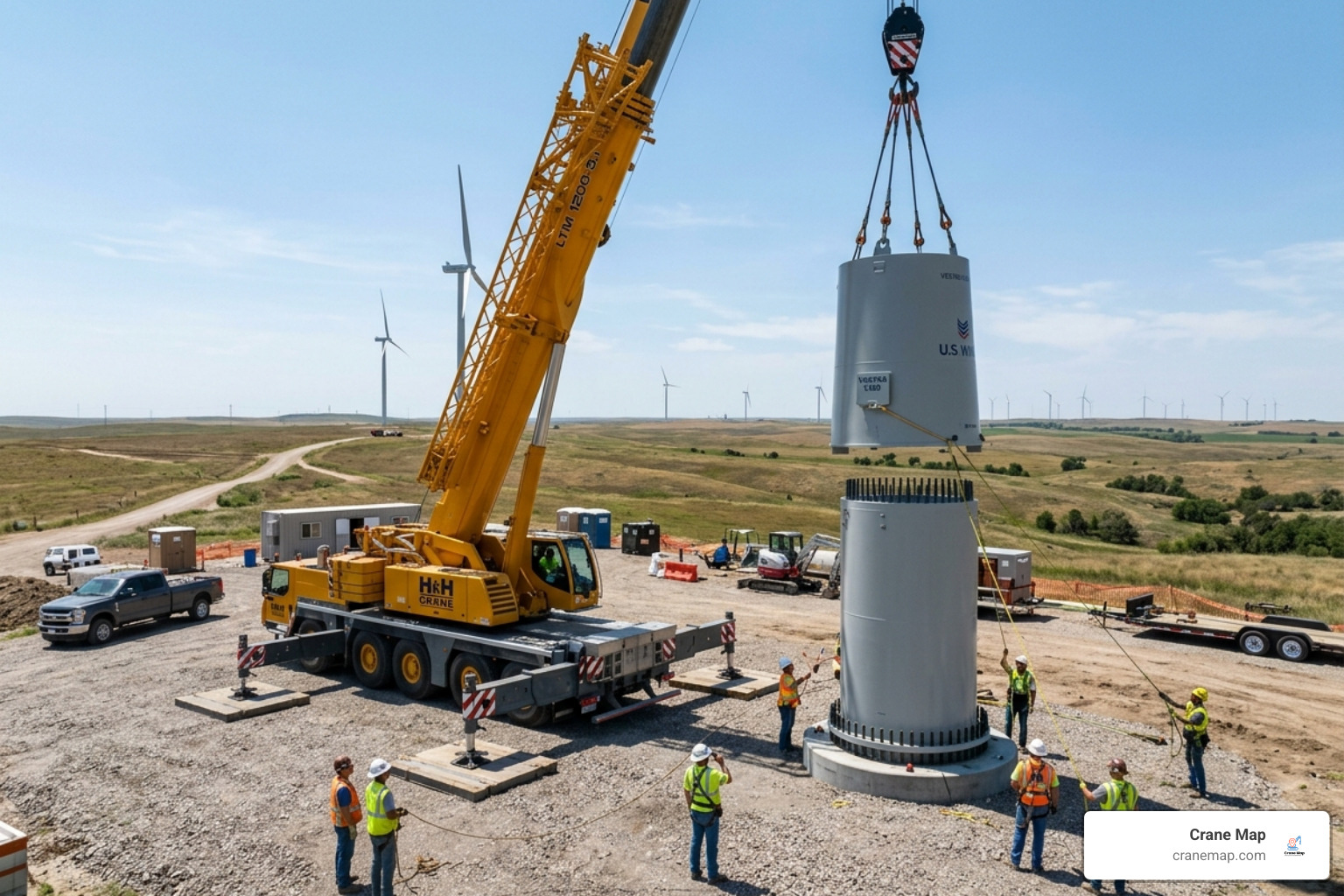
Where do these monsters of the construction world actually work? Because of their high capacity and relatively compact footprint (compared to larger 500-ton units), they excel in “intermediate” heavy lifting.
- Wind Farm Construction: While the largest turbines require massive crawlers, 200-ton cranes are perfect for maintenance, blade swaps, and assisting in the assembly of smaller tower sections.
- Tower Crane Assembly: Who builds the cranes that build the skyscrapers? Usually, a 200-ton all-terrain crane. Their long booms allow them to reach high enough to pin the jib and mast sections of tower cranes.
- Infrastructure and Bridges: Lifting precast concrete beams or steel girders for overpasses is a classic application. Their mobility allows them to move along the project path as the bridge progresses.
- Factory Relocations: Moving heavy industrial presses, transformers, or chillers requires precision. A 200-ton crane can often sit outside a facility and reach through a roof hatch or side opening to place equipment.
- Mass Transit Projects: In urban environments like Chicago or Seattle, these cranes are used to lift rail components and station structural steel where space is at a premium.
If you are wondering how the logistics of such a lift come together, you can see How It Works on our platform to get a better sense of the planning involved.
Navigating Costs and Rental Options
Let’s talk dollars and cents. 200 ton crane hire is a significant investment. Unlike a small boom truck that might cost $300 an hour, a 200-ton crane involves complex logistics.
Typical pricing factors include:
- Hourly/Daily Rates: While smaller cranes are often billed hourly, 200-ton units are frequently billed at daily or weekly rates. In 2026, expect base daily rates to exceed $2,000 for bare rentals, and significantly more for operated services.
- Mobilization and Demobilization: This is the cost of getting the crane to your site. For a 200-ton crane, this often involves “support trucks” to carry the counterweights and jib sections.
- Permits: If the crane is oversized or overweight for local roads, you’ll need pilot cars and special permits from the Department of Transportation.
- Fuel Surcharges: These machines consume a lot of diesel, both while driving and while operating the hydraulic systems.
Bare Rental vs. Operated & Maintained (O&M)
This is a fork in the road for many project managers.
Bare Rental means you are just renting the machine. You are responsible for providing a certified operator, fuel, and daily maintenance. This is often the choice for large construction firms that have their own crew on staff. It can save money on long-term projects, such as those found in Dallas or Houston.
Operated & Maintained (O&M) is a “turnkey” solution. The rental company provides the crane, a highly skilled (often NCAAA or state-certified) operator, a rigging team, and insurance. While the hourly rate is higher, the liability and planning burden shift to the crane company. For complex lifts—like tandem lifts where two cranes work together—we always recommend the O&M route to ensure maximum safety and synchronization.
Safety Protocols and Site Planning for Heavy Lifts

Safety isn’t just a checkbox; it’s the foundation of the entire industry. When you are suspended 200 tons in the air, there is zero room for error.
Ground Stability and Site Assessment
A 200-ton crane exerts massive pressure through its outriggers. A critical part of the hire process is a site assessment to ensure the ground won’t collapse. This might require the use of specialized outrigger mats or even temporary concrete pads.
3D Lift Plans
Modern 200 ton crane hire often includes a 3D lift plan. This is a digital simulation of the lift that accounts for:
- Overhead obstructions (power lines, trees).
- Swing radius.
- Ground pressure.
- The exact path of the load.
Rigging and Personnel
Every hire should include (or you must provide) a qualified rigging team. This includes signalers who communicate with the operator via radio or hand signals. Ensure all rigging gear—slings, spreader bars, and shackles—is inspected and rated for the specific load.
If you are planning a lift in a high-density area, such as Atlanta or Miami, these safety protocols are even more stringent due to the proximity of the public.
Frequently Asked Questions about 200 Ton Crane Hire
How much does it cost to rent a 200-ton crane?
While prices vary by region, a full-service (O&M) rental for a 200-ton crane typically starts at $1,500 to $2,500 per day, but that is just the base. Once you add in mobilization (transporting counterweights), rigging crews, and permits, a single-day lift can easily reach $5,000 to $10,000. For long-term projects in cities like Chicago, monthly rates offer better value.
What is the maximum reach of a 200-ton mobile crane?
Most all-terrain cranes in this class, like the Liebherr LTM 1200, feature a main boom of around 72 meters (236 feet). With the addition of a lattice fly jib or luffing jib, the maximum tip height can reach up to 92 meters (302 feet). However, your lifting capacity at that height will be a fraction of the 200-ton maximum.
Do I need a certified operator for a 200-ton crane?
Yes, absolutely. Operating a 200-ton machine requires specialized certification (such as NCCCO in the US or CICA in Australia). If you choose a bare rental, you must verify that your operator’s certifications are current and that they have experience with the specific model you are hiring. For projects in Nashville, local regulations may also require specific state-level licensing.
Conclusion
Success in heavy lifting comes down to the “Three Ps”: Planning, Precision, and the right Partner. 200 ton crane hire provides the incredible power needed for modern infrastructure, but it requires a disciplined approach to load charts, site conditions, and safety.
At Crane Map, we simplify the process of connecting you with the best equipment and the most reliable operators in the industry. Whether you are erecting a wind turbine, moving a factory, or building the next landmark in Nashville, don’t leave your project to chance.
Ready to get your project off the ground? Book your next lift via Crane Rental Nashville and let us help you find the perfect heavy-lift solution for your needs.