Why Finding Top Rated Crane Rentals Can Make or Break Your Project
Top rated crane rentals are the fastest way to get reliable lifting equipment — with certified operators, proven safety records, and the right capacity — without the cost of ownership.
When evaluating the best crane rental providers, look for these essential qualifications:
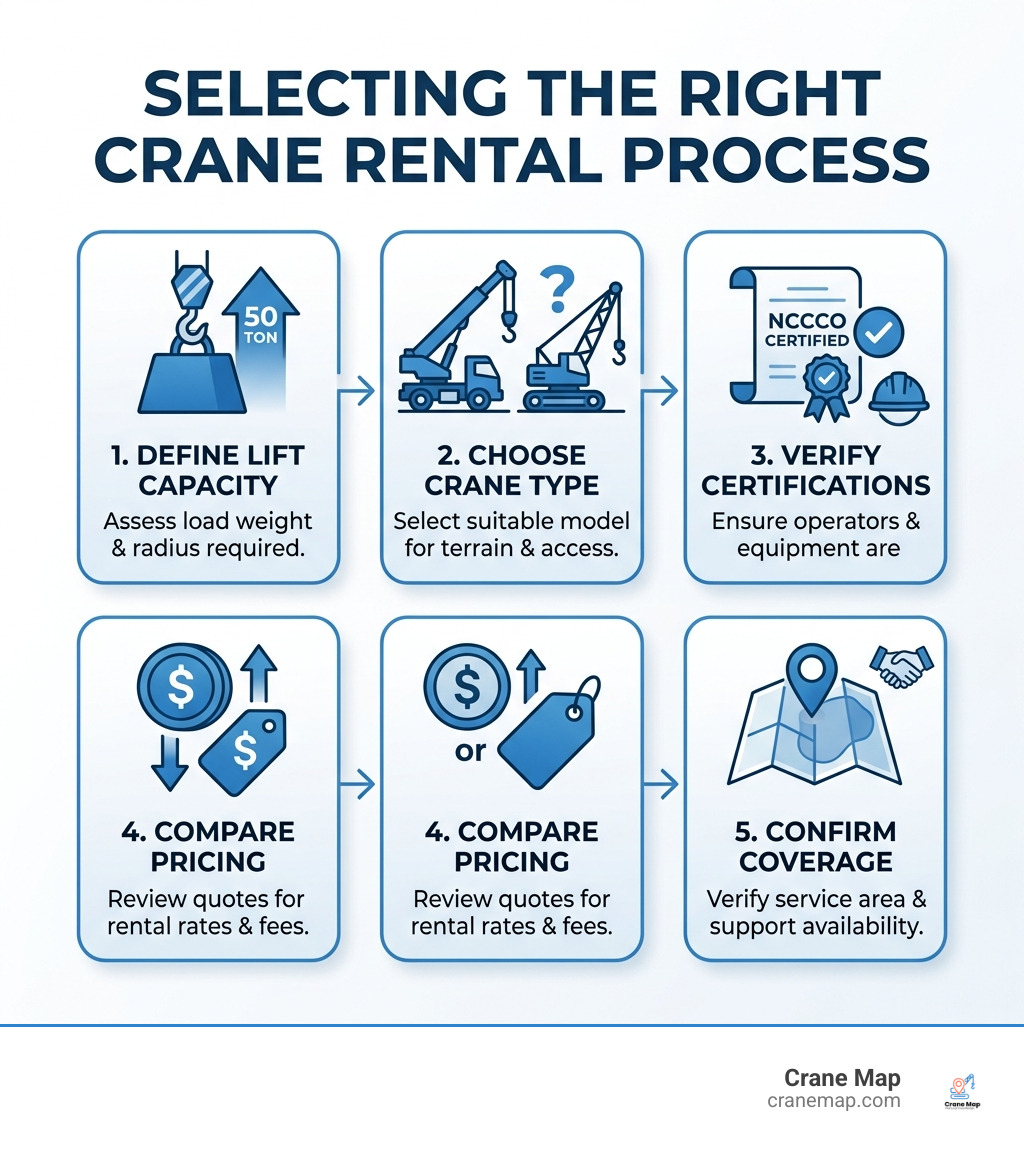
- Certified Operators: Ensure the company employs NCCCO certified professionals to guarantee safety and precision.
- Diverse Fleet Capacity: Top providers offer everything from small industrial cranes to heavy-lift crawlers exceeding 2,000 tons.
- Regional Expertise: Look for companies with deep roots in your specific area (such as the Mid-Atlantic or Southeast) for better logistical support.
- Comprehensive Services: The best partners provide 24/7 emergency support, specialized rigging, and heavy hauling capabilities.
Choosing the wrong crane rental — wrong capacity, uncertified operator, or no local support — can cause costly delays or serious safety risks on the job site.
Whether you’re managing a hospital expansion, a bridge build, or a rooftop HVAC install, the crane rental company you choose matters as much as the crane itself.
I’m Marilyn Nooren Wilkes, Marketing Director at CraneMap and a growth specialist in the Heavy Lift and Heavy Haul industries — I’ve spent my career helping contractors cut through the noise to find top rated crane rentals that match their exact project needs. In this guide, I’ll walk you through everything you need to compare providers, crane types, and pricing with confidence.
Key Factors That Define Top Rated Crane Rentals
When we talk about top rated crane rentals, we aren’t just looking at who has the biggest machine. A “top-rated” provider is one that balances iron-clad safety protocols with high-tier mechanical reliability and stellar customer support. In our experience at CraneMap, the difference between a smooth lift and a site shutdown often comes down to the “intangibles” like maintenance schedules and operator pedigree.
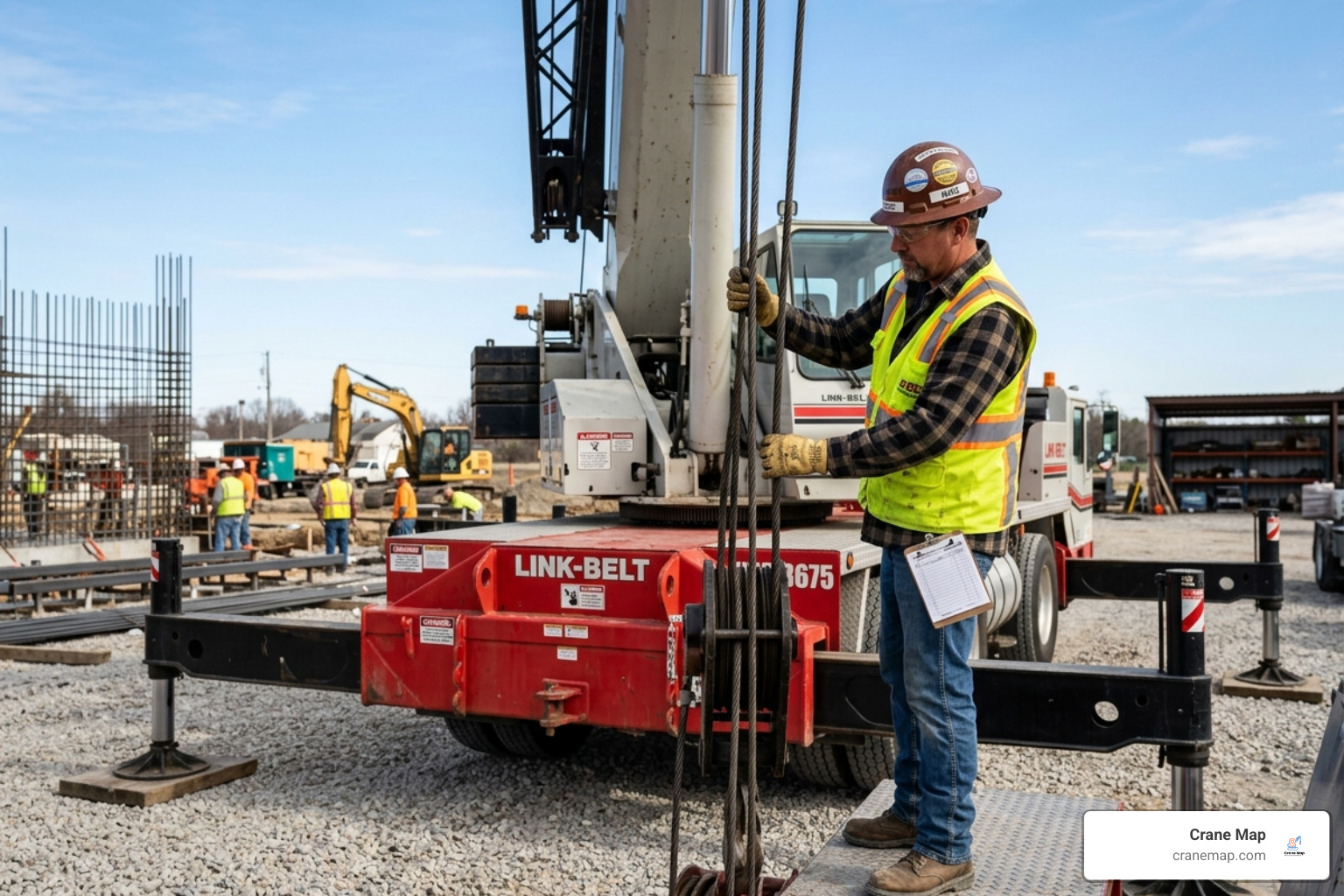
Safety isn’t just a buzzword in this industry; it is the foundation of every successful project. Top-tier companies invest heavily in ensuring their fleets meet or exceed Scientific research on crane load stability and safety standards. This includes regular structural inspections, dielectric testing for insulated equipment, and rigorous daily pre-lift checks.
Beyond the machine, you have to look at the person in the cab. We always recommend looking for providers that employ NCCCO (National Commission for the Certification of Crane Operators) certified professionals. These operators have undergone extensive training and testing to handle complex lifts under pressure. Furthermore, the best rental houses offer 24/7 emergency support. If a hydraulic line blows at 2:00 AM on a bridge project, you need a provider who answers the phone and has a service truck on the way within the hour.
Finally, don’t ignore the power of peer feedback. While we love technical specs, customer reviews often reveal the truth about a company’s punctuality and “soft skills.” For more detailed advice on what to look for, check out our Crane Rental Tips.
Comparing Top Rated Crane Rentals by Lifting Capacity
One of the first questions we hear is, “How much can it lift?” The range in the rental market is staggering. On the smaller end, specialized industrial rental providers offer cranes starting at just 1,500 lbs. These are perfect for interior warehouse work or tight factory floors where you need to move heavy motors or small assemblies.
As your project grows, so does the tonnage. Mid-range rentals typically fall between 30 and 100 tons—think boom trucks and rough terrain cranes used for residential construction or small commercial builds. However, for massive infrastructure projects, you’ll need the heavy hitters. Leading national providers maintain fleets with crawler cranes capable of lifting up to 2,535 tons.
When comparing capacities, don’t just look at the max tonnage. You must consider the boom length and vertical reach. A crane might be rated for 500 tons, but its capacity drops significantly as the radius increases. We always suggest reviewing load charts carefully before signing a contract. If you’re struggling to narrow down the right size, our guide on Finding Rental Crane can help you match specs to your site requirements.
Why Safety Certifications Matter for Top Rated Crane Rentals
In heavy lifting, “good enough” is never good enough. Top rated crane rentals prioritize OSHA compliance as a bare minimum. High-quality providers go further, implementing internal safety directors who enforce strict training regimens and proactive risk management.
For example, companies serving the electrical utility sector must perform dielectric testing on their insulated bucket trucks to ensure they are safe for work near high-voltage lines. Similarly, boom trucks and mobile cranes should undergo annual DOT and OSHA inspections to ensure structural integrity.
When you browse Featured Listings, you’ll notice that the highest-rated companies often highlight their safety awards or their low EMR (Experience Modification Rate). A low EMR indicates a history of safe operations, which can actually help lower your own insurance costs on a project. Choosing a certified provider isn’t just about following the law; it’s about protecting your crew and your bottom line.
Comprehensive Guide to Crane Types and Capacities
Choosing the right tool for the job is essential. You wouldn’t use a sledgehammer to hang a picture frame, and you shouldn’t use a 500-ton crawler crane to change a lightbulb in a parking lot. Here is a breakdown of the most common crane types available through top rated crane rentals across the country.
| Crane Type | Typical Capacity | Best Use Case | Key Feature |
|---|---|---|---|
| All-Terrain (AT) | 40 – 900+ Tons | Highway travel + off-road sites | Multi-axle steering for tight turns |
| Crawler Crane | 30 – 2,500+ Tons | Long-term heavy construction | High stability; moves with load |
| Carry Deck | 3 – 25 Tons | Industrial plants/warehouses | Low profile; fits in tight spaces |
| Boom Truck | 17 – 60 Tons | HVAC, roofing, light utility | Fast setup; highway legal |
| Rough Terrain (RT) | 15 – 165 Tons | Unimproved jobsites/mud | Oversized tires; 4-wheel drive |
| Tower Crane | 4 – 66 Tons | High-rise city construction | Massive height; small footprint |
- All-Terrain Cranes: These are the “Swiss Army Knives” of the crane world. They can drive at highway speeds to get to the job site and then navigate muddy or uneven terrain once they arrive. They are ideal for projects like bridge building or wind turbine installation.
- Crawler Cranes: These machines use tracks instead of wheels. Because they distribute their weight over a large area, they are incredibly stable. They are often used for massive projects like stadiums or manufacturing plants. These usually require multiple trucks to transport and on-site assembly.
- Carry Deck Cranes: Small, versatile, and maneuverable. These are designed to pick up a load, carry it on their “deck,” and navigate through narrow aisles.
- Boom Trucks: These are essentially cranes mounted on a standard truck chassis. They are the go-to for quick jobs like lifting a residential AC unit onto a roof.
For a full list of available equipment in your area, you can explore All Listings on our platform.
Regional Availability and Specialized Lifting Services
While some companies offer nationwide coverage, many of the top rated crane rentals are regional powerhouses that know the local terrain and regulations. In the Mid-Atlantic region—specifically Pennsylvania, New Jersey, and Delaware—established regional specialists have built decades-long reputations.
If you are looking for Chicago Rental options or Atlanta Rental services, you’ll find that availability varies by the local industrial demand. For instance, in the Southeast, there is a high demand for specialized rigging and “gentle touch” services for the food and beverage industry or historical renovations.
Top-tier providers offer more than just the crane. They provide a suite of specialized services:
- Specialized Rigging: Using high-capacity jacks, dollies, and customized hardware to move delicate or oversized items (like industrial tanks or priceless statues).
- Heavy Hauling: Transporting the crane components or the project materials (like bridge beams) to the site using multi-axle trailers.
- Warehousing and Storage: Providing a place to store heavy equipment or materials until the job site is ready for installation.
- Project Logistics: Full-service lift planning using 3D modeling software to ensure the crane fits and the ground can support the weight.
Pricing Structures and Rental Duration Factors
Understanding how you’ll be billed is crucial for project budgeting. Top rated crane rentals generally offer three main duration tiers: daily, weekly, and monthly. As you might expect, the longer the commitment, the lower the “per day” rate becomes.
However, the base rental price is just the beginning. We’ve found that several factors can influence the final invoice:
- Bare vs. Operated Rental: A “bare” rental means you just get the machine; you provide the fuel, insurance, and operator. An “operated” (or Manned) rental includes a certified operator and often maintenance support. For complex lifts, an operated rental is almost always the safer, more efficient choice.
- Transport Fees: For large cranes, the cost of “mobilization” and “demobilization” can be significant. This covers the fuel, pilot cars, and labor required to get the crane to your site.
- Fuel Surcharges: With fluctuating diesel prices, most companies include a surcharge that varies with the market.
- Overtime and Shift Differentials: If your project requires 24/7 work or weekend lifts, expect to pay a premium for labor.
If you are specifically searching for Miami Crane Rental or looking at rates in other high-demand hubs, keep in mind that local permit costs and “street closure” fees can also add up. Always ask for a comprehensive quote that includes these potential “hidden” costs so you aren’t surprised when the bill arrives.
Frequently Asked Questions about Crane Services
What is the difference between all-terrain and rough terrain cranes?
This is a classic question! All-terrain (AT) cranes are designed to be driven on public highways at normal speeds and then handle off-road conditions. They usually have multiple axles and a cab for driving. Rough terrain (RT) cranes are designed only for off-road use. They have two axles and massive tires. You cannot drive an RT crane on the highway; it must be hauled to the site on a trailer. RTs are generally less expensive to rent but have lower capacities than top-end ATs.
How do I determine the right crane capacity for my project?
Never guess! To determine capacity, you need three pieces of information: the weight of the load, the maximum height you need to reach, and the horizontal distance (radius) from the center of the crane to where the load will be placed. You also need to account for the weight of the “rigging” (the hooks, cables, and spreader bars). Most top rated crane rentals will provide a lift specialist to help you calculate this or use software to create a lift plan.
Are operators included in the rental price?
It depends on the contract. In an Operated and Maintained (O&M) rental, the operator, oiler, and all maintenance are included in the hourly or daily rate. In a Bare Rental, you are responsible for providing a qualified operator and performing basic daily maintenance. Most general contractors prefer operated rentals for high-capacity cranes to ensure the person in the cab is intimately familiar with that specific machine’s quirks.
Conclusion
Finding top rated crane rentals doesn’t have to be a daunting task. By focusing on safety certifications, mechanical diversity, and regional expertise, you can ensure your project stays on schedule and under budget. Whether you need a 15-ton carry deck for a warehouse in Lancaster County or an 800-ton crawler for a skyscraper in Philadelphia, the right partner is out there.
At Crane Map, we’ve simplified the search process. Our platform allows you to filter by crane type, location, and verified reviews, connecting you with the industry’s most trusted names. Don’t leave your heavy lifting to chance—work with providers who have the “towering ambition” to see your project through to completion.
Ready to start your next lift? Visit https://cranemap.com/ to find the perfect crane for your job today.